Appearance
The model is the entry point
The editor follows the familiar four C4 levels:
- System Context — the system boundary, users, and external dependencies.
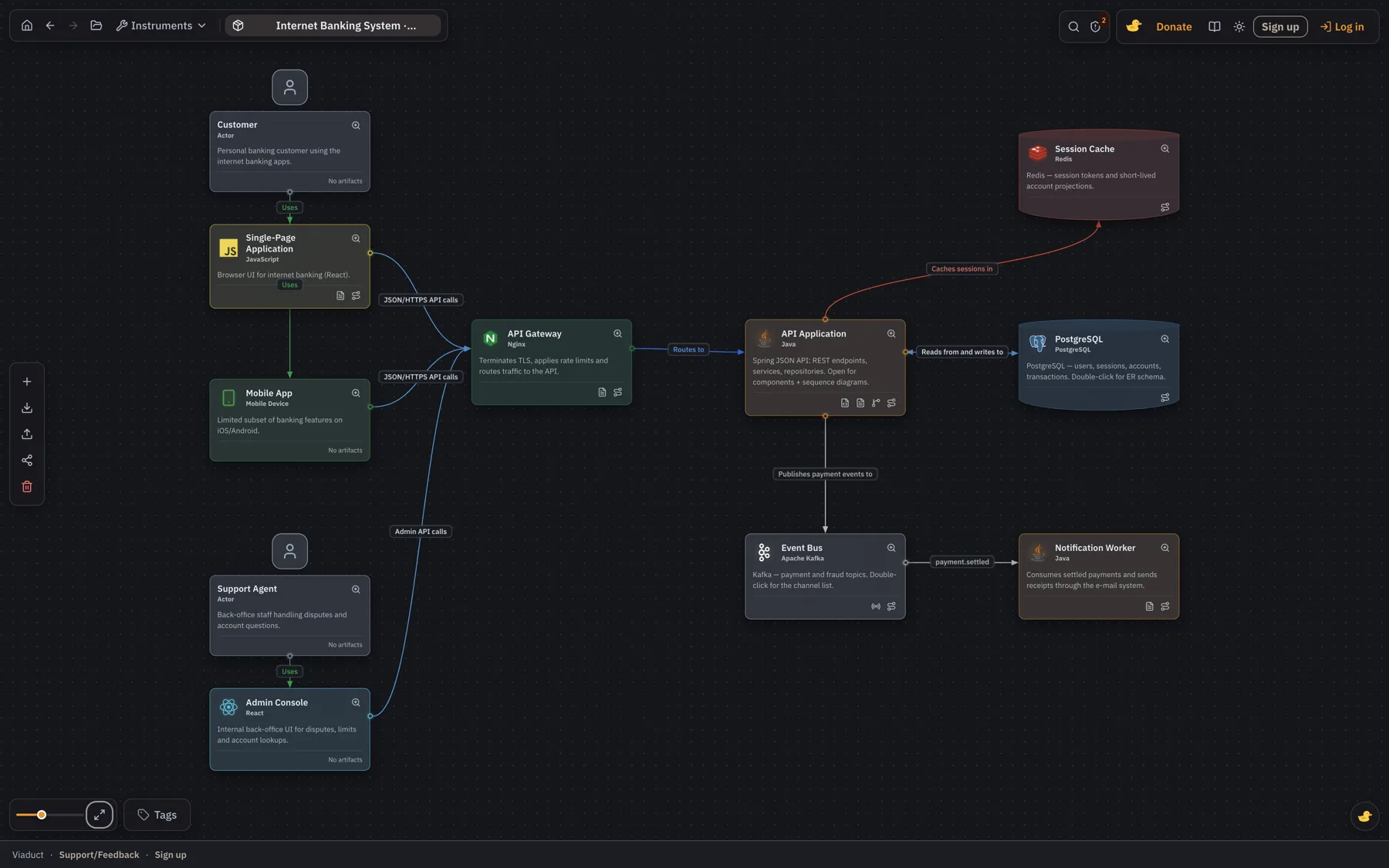
- Containers — applications, databases, web frontends, and other deployable or executable units.
- Components — controllers, services, adapters, endpoints, and internal building blocks.
- Code — classes, interfaces, functions, or other implementation-level objects where that detail is useful.
A small but important clarification: a container in C4 does not mean a Docker container. It is a high-level runtime or data-store boundary such as an API application, a PostgreSQL database, or a single-page web application.
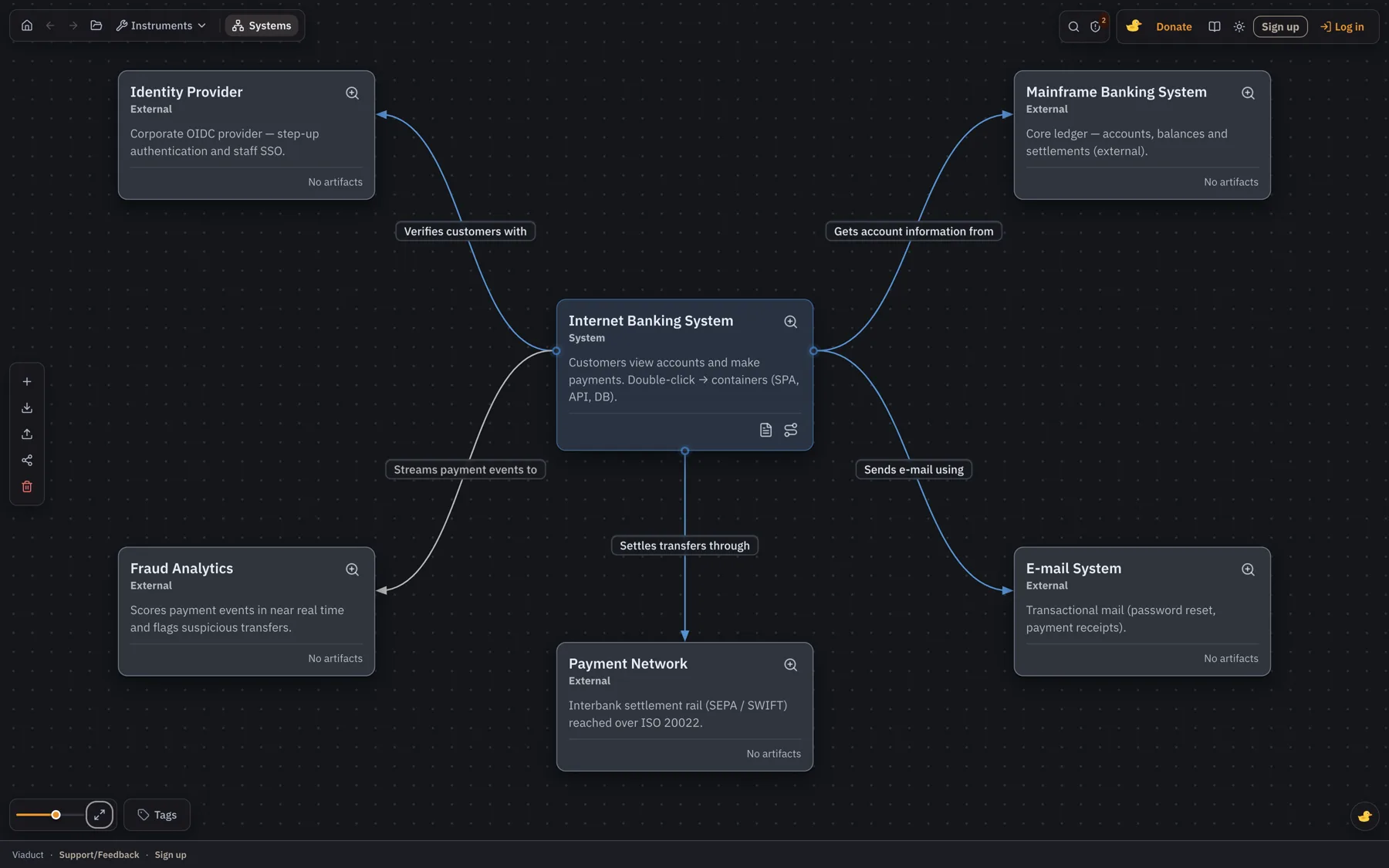
The point of these layers is not to document everything to the same depth. In most systems, Context, Container, and selected Component diagrams are enough. I only use the Code level for the parts that are genuinely hard to understand, risky to change, or important for onboarding.